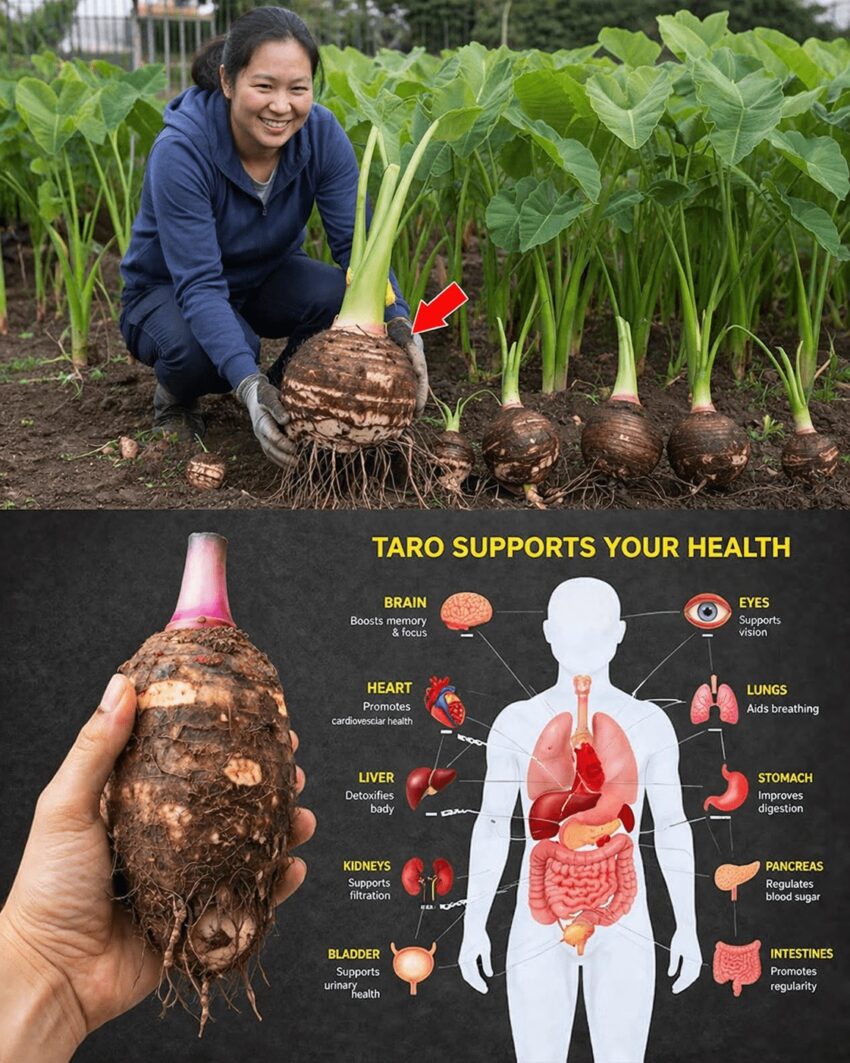
Taro is a starchy root vegetable that is widely cultivated and eaten in many parts of the world, particularly in Asia, Africa, and the Pacific islands. Here’s a detailed overview:
1. What is Taro?
- Scientific name: Colocasia esculenta
- Edible parts: corms (roots) and sometimes leaves
- Texture: Starchy, similar to potatoes, with a slightly nutty flavor
- Forms: Fresh, dried, or powdered for cooking
2. Nutritional Profile (per 100 g boiled taro)
| Nutrient | Amount |
|---|---|
| Calories | ~112 kcal |
| Carbohydrates | 26 g |
| Protein | 1.5 g |
| Fat | 0.1 g |
| Fiber | 4 g |
| Vitamins | Vitamin E, Vitamin C, some B vitamins |
| Minerals | Potassium, magnesium, phosphorus, manganese |
3. Health Benefits
- Supports Digestive Health – high fiber content helps regular bowel movements.
- Blood Sugar Control – complex carbs and fiber slow glucose absorption.
- Heart Health – potassium helps regulate blood pressure.
- Immune Support – vitamin C and antioxidants help fight free radicals.
- Bone Health – contains magnesium and phosphorus for strong bones.
4. Cooking Tips
- Peel carefully before cooking; raw taro contains compounds that can irritate the skin and mouth.
- Boiling, steaming, or roasting are common methods.
- Can be mashed like potatoes or added to soups, stews, and desserts.
- Leaves are edible when cooked, often used in curries or stews.
💡 Tip: Taro can be used in sweet or savory dishes. In desserts, it is popular as taro paste, bubble tea flavor, or puddings.
If you want, I can make a list of 5 popular ways to cook taro that are easy, healthy, and flavorful. Do you want me to do that?
