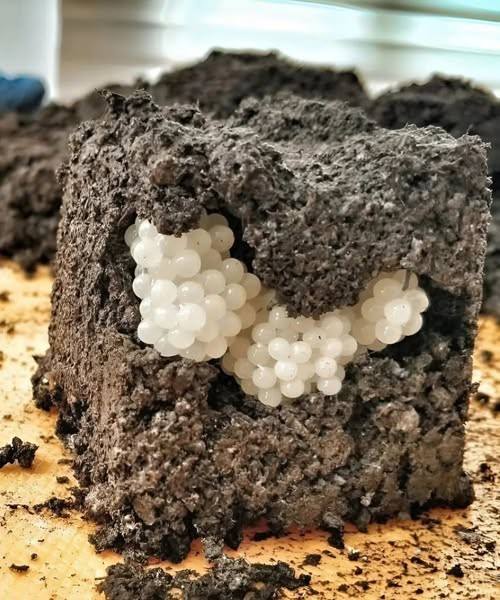
A pupa is the life stage of certain insects that occurs between the larva and adult stages during complete metamorphosis. It’s a transitional stage where the insect transforms from a feeding, growing larva into a fully formed adult.
🐛 Key Features
- Immobile: Pupae usually do not move or eat.
- Protected: Many are enclosed in a cocoon (moths) or chrysalis (butterflies).
- Transformation: Inside, larval tissues reorganize into adult structures such as wings, legs, and antennae.
🌎 Examples
- Butterfly: Chrysalis
- Moth: Silken cocoon
- Beetle: Pupa inside soil or wood
- Fly: Puparium (hardened skin of the last larval stage)
⚙️ Purpose
- Protects the insect while it undergoes dramatic body changes.
- Allows the insect to emerge as a fully formed adult, ready for reproduction.
The pupa is a fascinating demonstration of nature’s ability to transform a crawling larva into a winged or fully mature insect.
I can also make a simple diagram showing larva → pupa → adult to make it easier to visualize.
