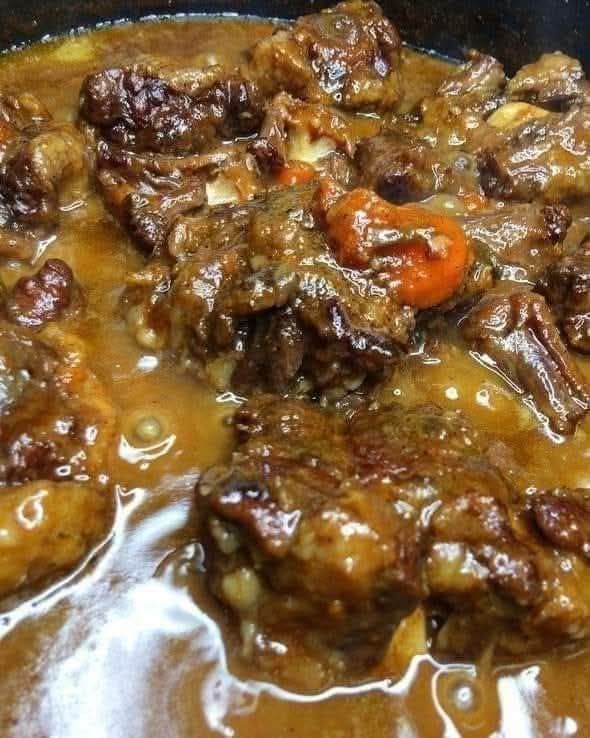
Oxtail is the culinary term for the tail of cattle. Despite its name, it’s not limited to oxen—any cow or steer tail can be used. It’s prized for its rich flavor and gelatinous texture, making it ideal for slow-cooked dishes like stews and soups.
🥩 Characteristics
- Flavor: Deep, beefy, and rich due to high collagen content
- Texture: Gelatinous and tender when slow-cooked
- Appearance: Sections of tail with a central bone surrounded by meat
🍲 Common Uses
- Oxtail stew: Slow-cooked with vegetables, herbs, and wine or broth
- Oxtail soup: Popular in Caribbean, Asian, and European cuisines
- Braised oxtail: Slowly cooked in sauces for tender, fall-off-the-bone meat
🔥 Cooking Tips
- Slow cooking is essential: Braising, pressure cooking, or slow roasting breaks down the collagen and makes the meat tender.
- Sear first: Browning the oxtail before cooking adds depth of flavor.
- Cook with aromatics: Onions, garlic, carrots, celery, herbs, and spices enhance the flavor.
- Long cook time: Usually 3–4 hours on the stovetop or 6–8 hours in a slow cooker.
🌎 Regional Variations
- Caribbean oxtail stew: Often includes beans, allspice, and Scotch bonnet peppers.
- Korean oxtail soup (Kkori Gomtang): Clear broth with long-simmered oxtail, garlic, and green onions.
- Italian coda alla vaccinara: Braised with tomatoes, celery, and red wine.
Oxtail is a hearty, flavorful cut that shines when cooked slowly, producing tender meat and a naturally rich, gelatinous broth.
If you want, I can provide a classic slow-cooked oxtail stew recipe that’s rich, savory, and perfect for family dinners.
