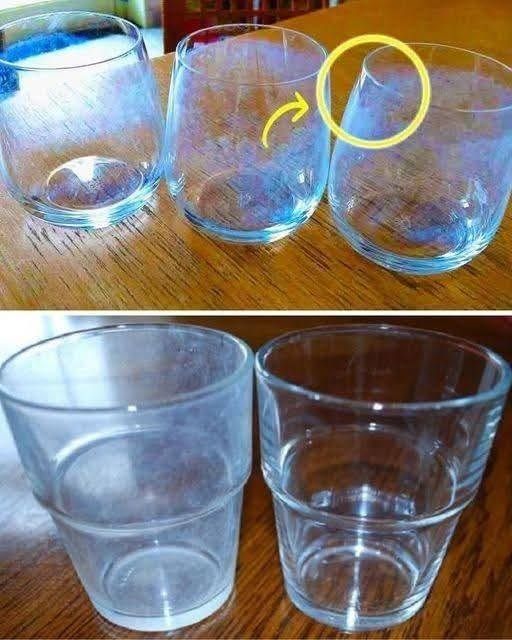
“Glasses with white patina” usually refers to glassware that has developed a cloudy, whitish film or haze on the surface. This is very common and can happen for a few different reasons:
🥛 1. Hard water deposits (most common)
- White, cloudy film on glass
- Caused by minerals (calcium, magnesium) in water
- Often seen after repeated dishwashing or air drying
👉 This is sometimes called “water spots” or “limescale.”
🧼 2. Dishwasher “etching”
- Looks like permanent white haze
- Happens when:
- water is too soft or too hot
- too much detergent is used
- This is actual surface damage, not just residue
🧪 3. Soap or detergent residue
- Thin white film that feels slightly greasy or streaky
- Caused by incomplete rinsing
🧴 4. Aging or chemical wear
- Over time, glass can lose clarity due to:
- repeated washing cycles
- high-alkaline detergents
- This is also called glass corrosion or etching
🧽 How to remove white patina
✔️ Vinegar soak (best method)
- Mix equal parts white vinegar + warm water
- Soak 15–30 minutes
- Rub gently with soft cloth
- Rinse and dry
✔️ Baking soda paste
- For stubborn spots
- Gentle scrubbing only (avoid scratching)
✔️ Lemon juice
- Natural acid helps dissolve mineral deposits
⚠️ When it cannot be fixed
If the glass is permanently etched, it:
- will not become fully clear again
- can only be slightly improved
- usually needs replacement
👍 Simple takeaway
White patina on glasses is usually:
- 💧 mineral buildup (fixable) OR
- 🧪 permanent etching (not reversible)
If you want, tell me how it looks (cloudy all over, spots, or rainbow-like), and I can tell you exactly which type it is and the best cleaning method.
