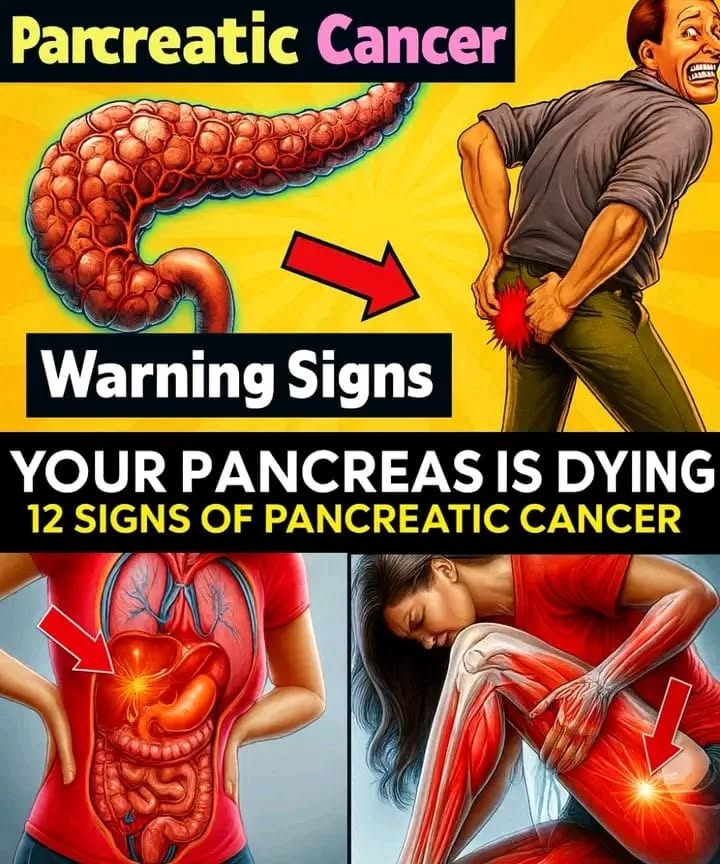
Here’s a clear, up‑to‑date overview of Pancreatic Cancer — including symptoms, causes, risk factors, diagnosis, and treatment options — based on trusted medical sources. (Mayo Clinic)
🧠 What Is Pancreatic Cancer?
Pancreatic cancer is a disease in which abnormal cells in the pancreas — a gland behind your stomach that helps with digestion and blood sugar regulation — grow uncontrollably and form a tumor. Most cases begin in the ductal cells of the pancreas. (Mayo Clinic)
There are two main types:
- Exocrine tumors (most common) — start in the pancreatic ducts.
- Neuroendocrine tumors (rare) — begin in hormone‑producing cells. (clevelandclinicabudhabi.ae)
🚨 Symptoms
Pancreatic cancer often has no early symptoms, which is why it’s frequently diagnosed at an advanced stage. As it grows, symptoms may include:
Common signs
- Upper abdominal pain that may radiate to the back
- Unexplained weight loss
- Loss of appetite
- Jaundice (yellowing of skin/eyes)
- Dark urine and light‑colored stools
- Fatigue and weakness
- Nausea, bloating, gas
- Itchy skin
- New or worsening diabetes
- Blood clots or swelling in limbs (Mayo Clinic)
Because symptoms can be vague, many people delay seeing a doctor until the disease is more advanced. (The Sun)
🧬 Causes & Risk Factors
Doctors don’t know an exact cause, but several risk factors are well‑established:
Non‑modifiable
- Older age — most people diagnosed over age 65
- Family history of pancreatic cancer
- Inherited genetic mutations (e.g., BRCA1/2, Lynch syndrome) (Mayo Clinic)
Modifiable or health‑related
- Smoking (major risk)
- Obesity and unhealthy weight
- Chronic pancreatitis (long‑term inflammation)
- Type 2 diabetes
- Heavy alcohol use
- Exposure to certain chemicals (Mayo Clinic)
Lifestyle changes like quitting smoking, maintaining a healthy weight, and eating a balanced diet may help lower risk. (The Times of India)
🩺 How It’s Diagnosed
Because early symptoms are subtle, diagnosis often involves imaging and labs:
- Blood tests, including tumor markers like CA 19‑9 (not always specific but useful)
- Ultrasound, CT scan, MRI
- Endoscopic ultrasound (EUS) with biopsy
- Sometimes genetic testing if there’s a family history (Mayo Clinic)
New early‑detection blood tests are being developed that could pick up pancreatic tumors before symptoms arise — a major advance given the disease’s late detection rates. (The Australian)
🧪 Treatment Options
Treatment depends on stage, overall health, and tumor location. Key options include:
🩹 Curative/Primary Treatments
Surgery
- Whipple procedure — removes the tumor and nearby organs (most common if cancer is in the head of the pancreas)
- Distal or total pancreatectomy — removes part or all of the pancreas (Mayo Clinic)
Chemotherapy
- Drugs that kill or slow cancer cell growth; may be given before surgery (to shrink tumors) or after (to reduce recurrence) (Cancer.gov)
Radiation Therapy
- High‑energy beams that target cancer cells; often combined with chemotherapy (Cancer.gov)
Targeted & Emerging Therapies
- Target specific genetic features of tumors
- Immunotherapy and novel agents are under study in clinical trials (Encyclopedia Britannica)
🩺 Supportive Care
- Palliative care focuses on comfort and quality of life
- Pain management, nutritional support, and symptom control are important (Mayo Clinic)
📉 Prognosis
Pancreatic cancer has one of the lowest survival rates of major cancers, largely because it’s often found late. However:
- Early detection significantly improves outcomes — new tests are promising. (The Australian)
- Treatment advances continue to evolve with clinical trials and precision medicine. (Encyclopedia Britannica)
Your doctor can offer individualized estimates based on stage, overall health, and treatment response.
🔍 When to See a Doctor
Seek medical advice if you notice:
- Persistent abdominal or back pain
- Unintended weight loss
- New jaundice or dark urine
- Recently developed diabetes without clear cause
Early evaluation allows faster diagnosis and treatment. (Mayo Clinic)
If you’d like, I can summarize what staging and survival statistics look like or explain the Whipple surgery procedure in detail.
