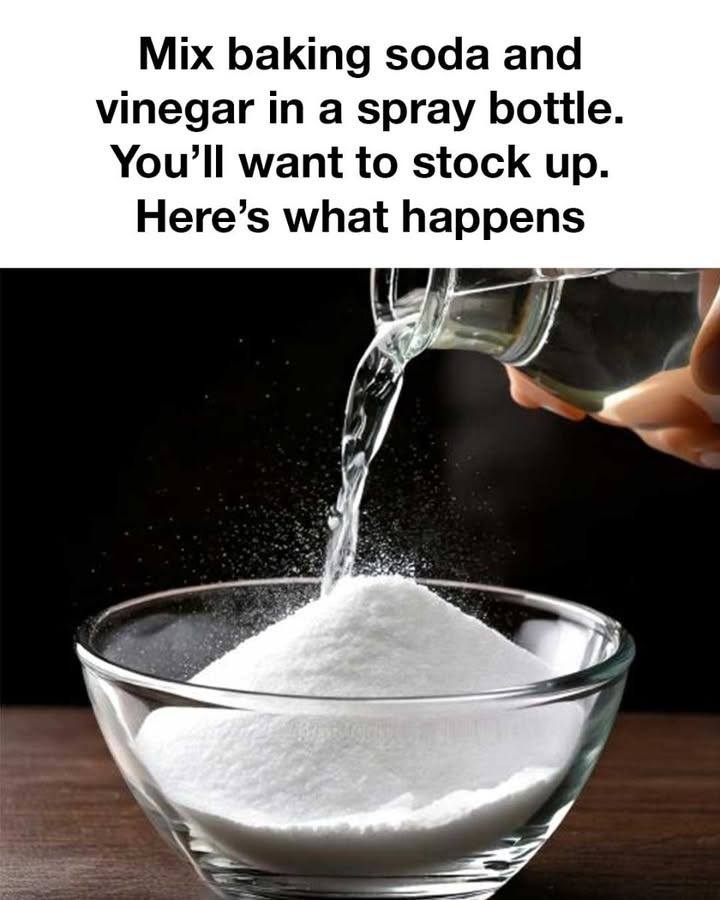
Mixing baking soda and vinegar in a spray bottle is generally not recommended. ⚠️ Here’s why:
What Happens Chemically
When you mix baking soda (sodium bicarbonate) with vinegar (acetic acid), they react and produce:
- Carbon dioxide gas (CO₂)
- Water
- Sodium acetate
This reaction is the same fizzy one used in science experiments.
Why It’s a Problem in a Spray Bottle
- Pressure builds up
The carbon dioxide gas created in the reaction builds pressure inside the closed bottle. - Bottle can burst or leak
The pressure may cause the spray bottle to pop, crack, or spray unexpectedly. - Cleaning power disappears
After the reaction finishes, the mixture mostly becomes salt water (sodium acetate solution), which is much less effective for cleaning.
Better Way to Use Them for Cleaning
Use them separately instead:
Method:
- Sprinkle baking soda on the dirty surface (sink, drain, or stovetop).
- Spray vinegar on top.
- Let it fizz for a minute.
- Scrub and rinse.
This method works well for:
- Sink drains
- Stovetops
- Bathroom tiles
- Removing odors
Safe Alternative Spray
For a simple homemade cleaner:
- 1 cup vinegar
- 1 cup water
- A few drops of lemon juice or dish soap
Mix these in a spray bottle safely. 🧽
✅ If you want, I can also show you 10 powerful homemade cleaners using baking soda and vinegar that actually work better than many store products.
