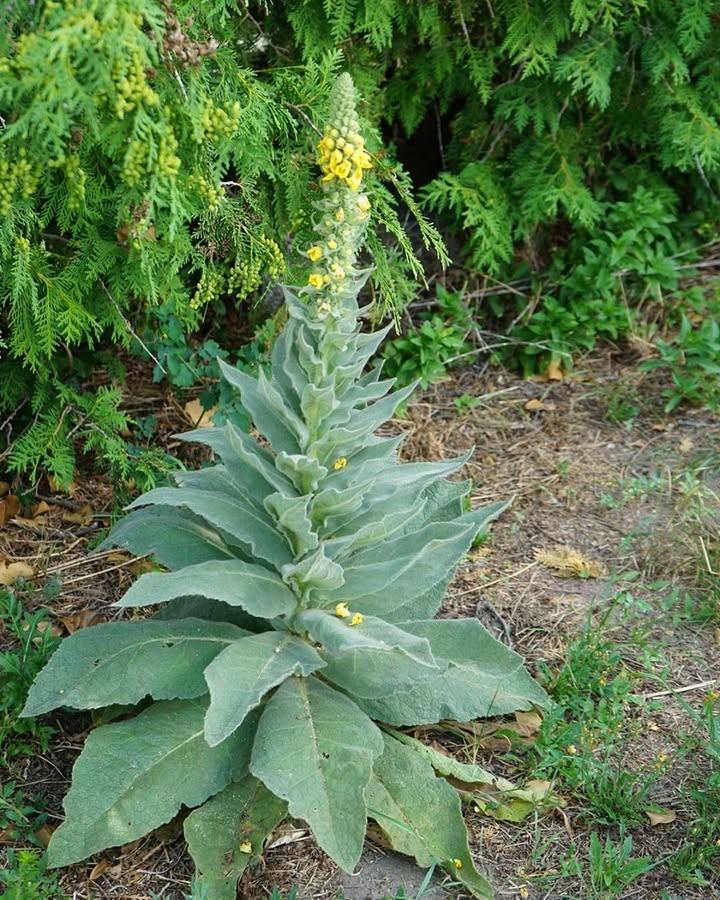
Great mullein (Verbascum thapsus) is a tall, flowering plant known for its medicinal uses and striking appearance. Here’s a detailed overview:
🌿 General Information
- Scientific Name: Verbascum thapsus
- Family: Scrophulariaceae
- Origin: Europe, Asia, and North Africa; now widespread in North America
- Plant Type: Biennial herb
🌱 Characteristics
- Leaves: Large, soft, fuzzy, gray-green leaves covered with tiny hairs
- Flowers: Yellow, densely packed on a tall spike, blooming in the second year
- Height: Can grow up to 6–10 feet tall
- Growth Habit: Biennial – first year forms a rosette of leaves, second year produces flowering stalk
💊 Traditional Uses
- Respiratory Support: Leaves and flowers used in teas or tinctures for coughs, bronchitis, and sore throats
- Skin Care: Poultices made from leaves used for minor wounds, burns, or inflammation
- Earaches: Infused oil from flowers is sometimes used as a natural remedy for ear infections
🌟 Interesting Facts
- The plant is biennial, meaning it lives for two years: vegetative growth in year one, flowering and seeding in year two.
- Its fuzzy leaves help retain moisture and protect against harsh sunlight.
- Known as “velvet plant” due to the soft texture of its leaves.
⚠️ Cautions
- Generally considered safe when used externally or in teas, but should not replace medical treatment for serious respiratory or ear conditions.
- Allergic reactions are rare but possible; always test a small amount first.
If you want, I can make a quick guide on how to grow and use great mullein at home for teas, tinctures, or natural remedies.
Do you want me to do that?
