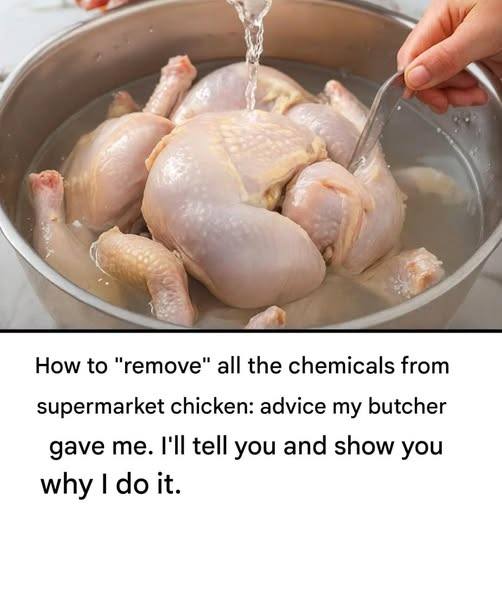
You can’t realistically “remove all chemicals” from supermarket chicken—because chicken already contains natural compounds, and most “chemicals” people refer to are either water, salt solutions, or approved food preservatives used for safety and shelf life.
Chicken sold in supermarkets is generally regulated and safe to eat, but you can reduce additives and surface residues with proper preparation.
🧠 What people usually mean by “chemicals”
In supermarket chicken, this may include:
- Salted water (brining solution)
- Natural moisture retention additives (like phosphates in some countries)
- Surface bacteria (not “chemicals,” but needs cleaning)
🧼 What you can actually do safely
🚫 1. Don’t wash raw chicken under the tap
- It spreads bacteria (like Salmonella) around your kitchen
- Cooking kills bacteria—not washing
💧 2. Pat dry instead
- Use paper towels to remove surface moisture
- Helps with cleaner cooking and better browning
🧂 3. Soak (optional, for taste—not “chemical removal”)
- Light saltwater or vinegar soak for 15–30 minutes
- Can improve texture and reduce odor slightly
- Then discard water and pat dry
🔥 4. Cook thoroughly
- Internal temperature should reach 74°C (165°F)
- This is the real safety step that matters
🧊 5. Buy minimally processed chicken
- Choose “fresh, unseasoned” or “no added solution” labels
- Avoid heavily marinated or injected products if you want fewer additives
⚠️ Important truth
- ❌ You cannot “wash out” all additives or compounds
- ✔️ You can choose cleaner products and cook properly
- ✔️ Safety depends more on handling + cooking, not rinsing
✔️ Bottom line
There is no method to remove “all chemicals” from chicken. The safest and most effective approach is to buy minimally processed chicken, avoid washing, and cook it properly at high temperature.
If you want, I can give you a guide on how to identify clean-label chicken at the supermarket or how to cook it in a healthier way 👍
