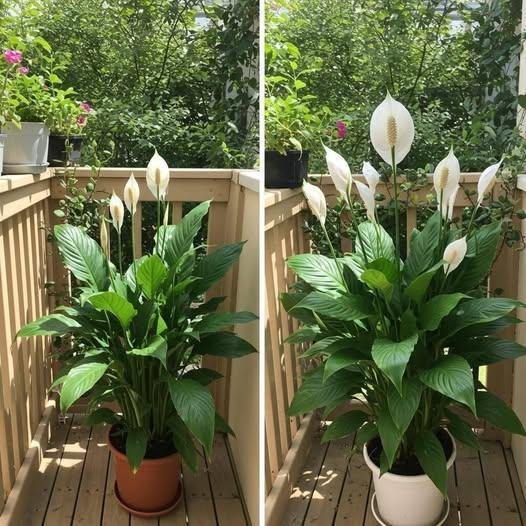
Spathiphyllum wallisii is a popular indoor plant commonly known as the peace lily. It is widely grown for its elegant white flowers and ability to thrive in low light.
🌿 What it looks like
- Dark green glossy leaves
- White “flower” (actually a modified leaf called a spathe)
- Grows in clumps and stays compact indoors
🏡 Why people grow it
- Beautiful decorative houseplant
- Very low-maintenance
- Grows well in low to medium light
- Improves indoor aesthetics
💧 Care requirements
Light
- Prefers indirect light
- Can survive in low light, but blooms less
Water
- Keep soil slightly moist
- Drooping leaves often mean it needs water
- Do NOT overwater (root rot risk)
Temperature
- Best: 18–27°C
- Avoid cold drafts
🌬️ Air benefits
Peace lilies are often mentioned in indoor air discussions because they can:
- Absorb some indoor pollutants
- Increase humidity slightly
(But they are not a substitute for proper ventilation.)
⚠️ Important safety note
- Toxic if eaten by pets (cats and dogs)
- Can cause mouth irritation if chewed
🌸 Flowering
- Produces white blooms mainly in spring and summer
- Needs proper light and feeding to flower well
✔️ Bottom line
Spathiphyllum wallisii (peace lily) is a low-maintenance indoor plant valued for its beauty, air-purifying reputation, and ability to grow in low light—making it a favorite for homes and offices.
If you want, I can show:
- How to make it bloom more often
- Or common reasons peace lilies stop flowering 👍
