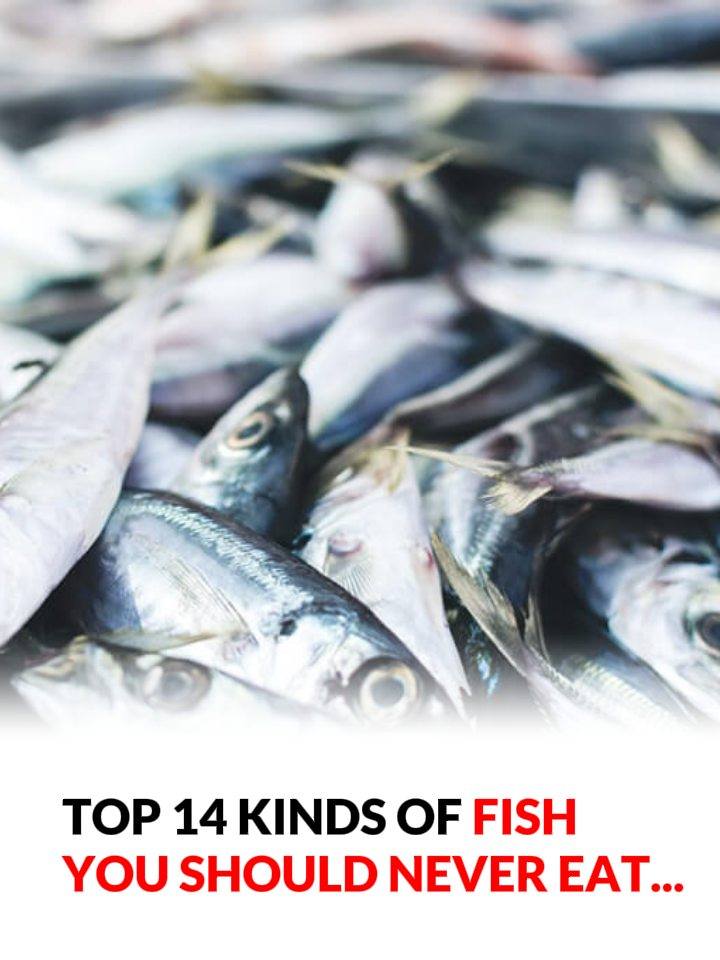
The claim “Top 14 fish you should never eat” is another clickbait-style headline. In reality, there are no fish you must “never” eat universally—but there are some fish that should be limited due to mercury, pollution, or overfishing.
Here’s the scientific, balanced explanation 👇
⚠️ Fish you should limit (not completely avoid)
🧠 1. High-mercury large fish
These can contain more mercury because they are high up the food chain:
- Shark 🦈
- Swordfish
- King mackerel
- Tilefish
- Marlin
👉 High mercury can affect the nervous system if eaten too often.
🐟 2. Some large tuna types
- Bigeye tuna
- Some bluefin tuna
👉 Safe occasionally, but not daily.
🌊 3. Farmed fish concerns (depends on source)
Not all farmed fish are bad, but risks can include:
- Lower omega-3 quality
- Antibiotic use in poorly regulated farms
Examples sometimes debated:
- Farmed salmon (depends on country/quality standards)
🧪 4. Contaminated or unsafe fish (location-based risk)
Fish caught in polluted waters may contain:
- Heavy metals
- Industrial toxins
👉 This is not about species but environment.
🐠 Healthy fish you should eat instead
These are generally safer and recommended:
- Salmon
- Sardines
- Trout
- Herring
- Anchovies
🧠 Key fact
Fish is not “dangerous food”. It is one of the healthiest protein sources when chosen wisely.
✔️ Bottom line
There are no fish you must completely avoid, but some large predatory fish (like shark or swordfish) should be limited due to mercury. Most common fish are safe and very healthy when eaten in moderation.
If you want, I can give you:
- A safe fish eating guide per week
- Or best fish for heart, brain, and weight loss 👍
