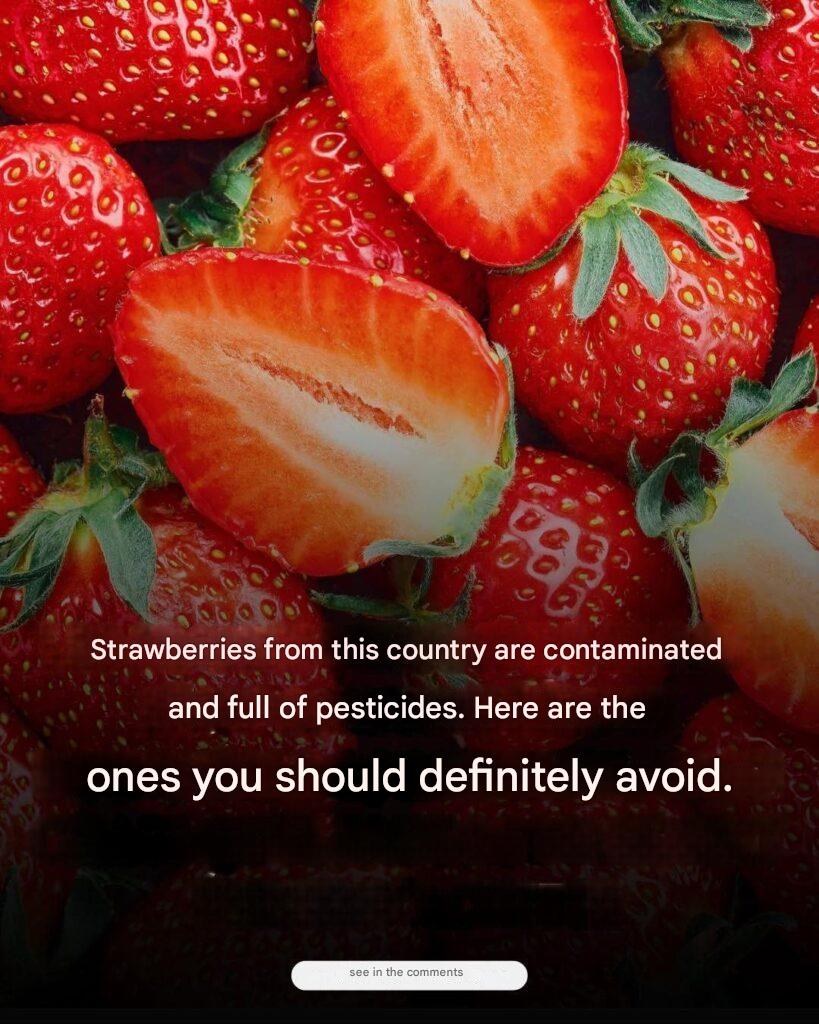
There have been reports linking strawberries and other produce with higher pesticide residue levels, but it’s not accurate to say all strawberries from one specific country are universally “contaminated and full of pesticides.” Here’s the realistic context based on recent data and food safety reports:
🍓 Strawberries Often Test High for Pesticides
- According to the 2026 “Dirty Dozen” report published by the Environmental Working Group (EWG), strawberries rank among the fruits most likely to carry pesticide residues when conventionally grown (non‑organic). The guide is based on U.S. testing data and finds many samples contained multiple pesticide residues. (EWG)
🌍 Not Country‑Specific but Production‑Based
- The pesticide concerns are about farming practices and residue levels on produce, not a blanket statement about a specific country’s strawberries being inherently unsafe.
- For example, the EWG Dirty Dozen list covers many fruits and vegetables (including strawberries) sold in U.S. markets, not just imports from one country. (EWG)
🌱 How Pesticide Residues Occur
- Strawberries and other berries often require more crop protection due to their delicate nature and susceptibility to pests, which means more pesticide use is common in conventional farming.
- Tests also find residues of newer pesticide classes, sometimes including persistent chemicals (e.g., PFAS), on multiple produce types. (EWG)
🧪 Border Inspection Incident
- There was a recent case in which imported Japanese strawberries failed inspection in Taiwan due to pesticide residues exceeding local limits. That was specific to a few batches, not a wholesale country‑wide condemnation. (Reddit)
✅ So What’s the Practical Conclusion?
- Strawberries (especially conventionally grown ones) are frequently found with detectable pesticide residues in U.S. and other markets, which is why groups like EWG list them as high‑residue produce. (EWG)
- However, this is about farming practices and residue testing—not a claim that “all strawberries from a particular country are contaminated.”
- Levels can vary by country, farm, practice, and regulations; different countries enforce different pesticide standards.
🥦 Tips to Reduce Exposure
If you’re concerned about pesticide residues:
- Choose organic strawberries when possible — organic farming uses fewer synthetic pesticides.
- Wash thoroughly under running water or use a vinegar soak (though no washing eliminates all residues).
- Eat a variety of fruits and vegetables — diversity helps reduce cumulative pesticide exposure.
- When available, buy from local farmers you trust or home‑grown produce.
If you want, I can break down the “Dirty Dozen” and “Clean Fifteen” guide so you know which produce is typically highest and lowest in pesticide residues in the latest tests.
Would you like that?
