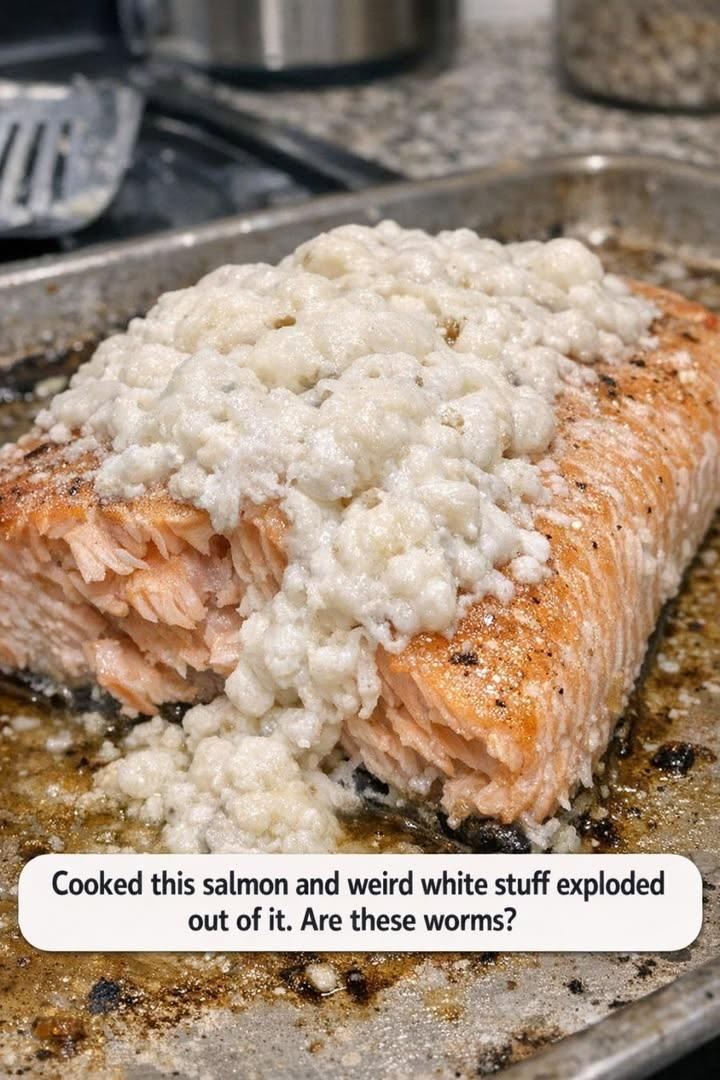
The white substance you sometimes see on cooked salmon is called albumin.
🧪 What It Is
- Albumin is a protein naturally present in the fish’s muscle.
- When salmon is cooked, the heat causes the albumin to coagulate and squeeze out of the muscle fibers.
- It appears as a white, creamy or slightly rubbery layer on the surface of the fillet.
✅ Is It Safe?
- Yes, it’s completely safe to eat.
- It doesn’t indicate spoilage or poor quality.
🔥 How to Minimize It
- Cook gently: Lower temperature cooking (around 275–325°F / 135–160°C) keeps albumin from rushing out.
- Brine the salmon: A brief saltwater soak firms up proteins.
- Don’t overcook: Cook until the internal temperature reaches about 125–130°F (52–55°C) for medium-rare or 140°F (60°C) for fully cooked.
- Rest after cooking: Let it sit a few minutes; residual heat finishes cooking without pushing out more albumin.
If you want, I can explain why it appears more on some salmon types than others and how to make your fillets look smooth and pink when serving.
